
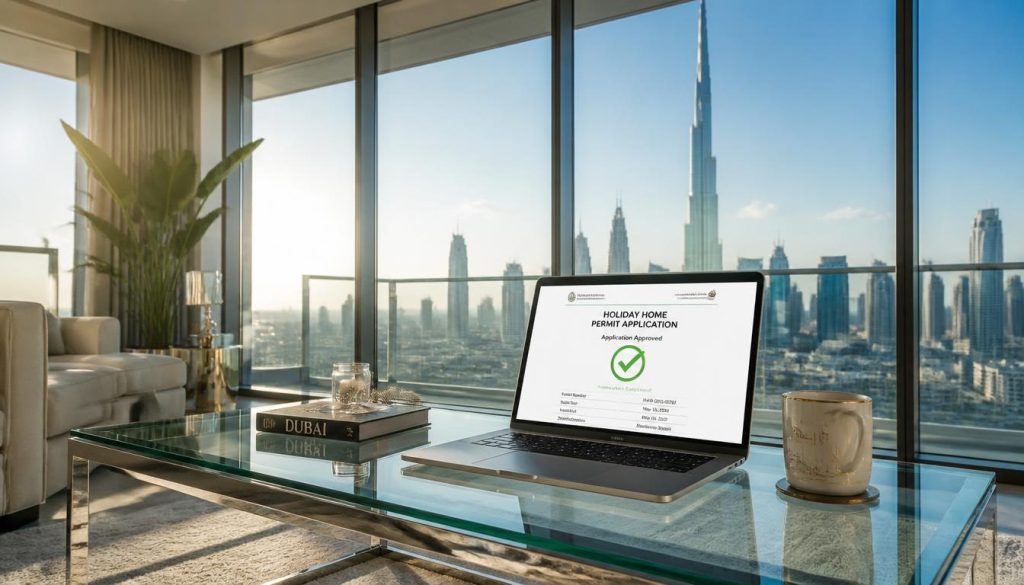
Dubai’s booming tourism sector and the rising demand for flexible, short-term stays have made the holiday home market highly lucrative. Whether you are targeting digital nomads looking for month-long stays or families seeking weekend getaways, renting out your property can significantly maximize your rental income in Dubai. However, before you list your property on platforms like Airbnb or Booking.com, compliance is absolutely non-negotiable. The Department of Economy and Tourism (DET) mandates a strict regulatory framework for all short-term rentals. This guide will walk you through the entire process of securing your holiday home licence in Dubai, ensuring you stay legally compliant while maximizing your returns.
Why Do You Need a Holiday Home Licence in Dubai?
In recent years, the Dubai government has taken significant steps to regulate the short-term rental market. The primary goal is to maintain the city’s reputation as a world-class tourist destination by ensuring that all holiday homes meet stringent safety and quality standards. But beyond the overarching goal of quality control, why is this licence so critical for property owners and investors?
First and foremost, obtaining a holiday home licence is a strict legal requirement. It is no longer just a regulatory formality; it is a fundamental operational necessity. The era of informal, under-the-radar short-term rentals has effectively come to an end. In 2026, Dubai utilizes advanced digital and electronic monitoring systems to track short-term rental listings across major global platforms. These systems automatically cross-reference active listings against the official DET database.
If you are caught operating an unlicensed property, the consequences are severe. Unlicensed operators face immediate removal and blacklisting from platforms like Airbnb, alongside steep financial penalties.
The Risk Matrix: Licensed vs. Unlicensed Operations
| Feature | Licensed Holiday Home | Unlicensed Property |
|---|---|---|
| Platform Visibility | Prime placement on Airbnb, Booking.com | Immediate removal / Account ban |
| Financial Risk | Initial permit costs only | Minimum AED 5,000 fine per violation |
| Guest Trust | High (Verified by Dubai Tourism) | Low (Risk of mid-stay eviction) |
| Future Viability | Easy annual renewal | Potential lifetime ban on permits |
Fines for operating without a valid DET permit start at a minimum of AED 5,000 and can escalate significantly for repeat offenses. Furthermore, being penalized for non-compliance can jeopardize your ability to obtain a licence in the future.
As industry experts have noted, “Obtaining a formal permit is no longer just a regulatory requirement but a fundamental operational necessity. The informal era of short-term rentals has effectively ended due to aggressive digital enforcement.”
By securing the proper licensing, you not only protect yourself from these severe penalties but also build trust with your guests. A DET-approved property signals to potential renters that your home meets Dubai’s high standards for safety, cleanliness, and comfort, which ultimately leads to better reviews and higher occupancy rates.
When is the Right Time to Apply for Your Permit?
Timing is everything when it comes to launching a successful holiday home. A common mistake many first-time operators make is waiting until their property is fully furnished and ready for guests before initiating the licensing process. This can lead to costly delays and missed booking opportunities.
Generally, the entire process of obtaining a holiday home licence takes between two to four weeks. While the initial account creation on the DET portal is instantaneous, the subsequent steps require time. For instance, obtaining a No Objection Certificate (NOC) from your developer or building management can take several days. Additionally, if your property requires minor renovations or upgrades to meet the specific classification standards set by the DET, you will need time to execute these changes before the physical inspection.
Therefore, the best time to apply for your permit is as soon as you have secured the property and have the Title Deed in hand. You should initiate the application process while you are still in the furnishing and decoration phase. By aligning the bureaucratic process with your physical preparation of the property, you ensure that the moment your home is guest-ready, your legal permit is approved, allowing you to start accepting bookings immediately. If you are unsure about the financial implications of setting up your property, you might want to read more on how to set the right rent price for your property to ensure your short-term strategy aligns with your long-term financial goals.
How to Legally Rent Your Property: A Step-by-Step Guide
Navigating the bureaucratic landscape of property licensing can seem daunting, but the DET has streamlined the process significantly. Here is a comprehensive, actionable, step-by-step guide to securing your holiday home licence in Dubai.
Step 1: Account Creation on the DET Portal
The first step is to register yourself as a holiday home operator on the official Dubai Department of Economy and Tourism (DET) Holiday Homes portal. You will need to provide your basic contact information and create a secure login. If you are an individual owner, you will register as an individual operator. If you are a professional management company, you will register under your corporate trade license.
Step 2: Document Preparation and Verification
Before you begin the application for a specific unit, you need to gather the necessary documentation. The DET requires strict verification to ensure you have the legal right to lease the property short-term. You will need:
- A clear copy of your Emirates ID or Passport.
- A copy of the Title Deed in your name.
- A recent DEWA (Dubai Electricity and Water Authority) bill registered under your name.
- If you are applying as a tenant (more on this below), you will need the Ejari and a formal NOC from the landlord.
Step 3: Submit Your Application and Unit Details
Once your profile is verified, you can add your specific property to the portal. You will need to input detailed information about the unit, including the number of bedrooms, the exact location, the building name, and the amenities provided (e.g., swimming pool, gym access, parking). Accuracy is crucial here, as discrepancies can lead to delays or rejections during the inspection phase.
Step 4: The Physical Inspection and Property Classification
After submitting your application, the DET will schedule a physical inspection of the property. The purpose of this inspection is to ensure the home meets the required safety, hygiene, and aesthetic standards. Based on the inspection, the DET will classify your property as either ‘Standard’ or ‘Deluxe’. This classification determines the amount of Tourism Dirham you will need to collect from your guests. To achieve a ‘Deluxe’ rating, your property must offer premium furnishings, superior amenities, and exceptional overall quality.
Step 5: Pay the Required Fees and Receive Your Permit
Once your property passes the inspection and receives its classification, you will be prompted to pay the associated fees. The costs typically include a one-time registration fee, a unit classification fee, and a permit fee based on the number of bedrooms in your property.
To help you budget, here is a breakdown of the standard DET fees for holiday homes in 2026:
| Fee Type | Description | Estimated Cost (AED) |
|---|---|---|
| Initial Registration | One-time account setup fee | 1,500 |
| Unit Classification | Standard vs. Deluxe grading fee | 50 – 100 |
| Bedroom Permit Fee | Annual fee per bedroom (max AED 1,200) | 300 per room |
| Tourism Dirham (Standard) | Collected from guests per room/night | 10 |
| Tourism Dirham (Deluxe) | Collected from guests per room/night | 15 |
Note: Fees are subject to change by the DET. Always consult the official portal for the most current rates.
Upon successful payment, your official holiday home permit will be issued electronically. You must display this permit prominently within the property and include the permit number on all your online listings.
What Properties Are Eligible (and Which Aren’t)?
Before embarking on the licensing journey, it is vital to understand that not every property in Dubai can be legally converted into a holiday home. Knowing the eligibility criteria upfront will save you significant time and financial resources.
Eligible Properties
Generally, freehold residential properties are fully eligible for holiday home licensing. This includes standalone villas, townhouses, and residential apartments in designated freehold areas across Dubai.
Ineligible Properties
There are specific categories of real estate that are strictly prohibited from being licensed as holiday homes by individual operators:
- Hotel Apartments: Properties classified as hotel apartments cannot be licensed as individual holiday homes.
- Hotel-Managed Units: If your residential unit is part of a rental pool managed by a hotel operator, you cannot independently secure a holiday home licence for it.
- Shared Accommodations: The DET requires the entire unit to be registered and rented as a whole. Renting out individual rooms within an apartment or villa (shared accommodation) is strictly illegal under the holiday home regulations.
The Role of Community Rules and Developer NOCs
Even if your property meets all the DET eligibility requirements, you are not entirely in the clear. You must also consider the internal regulations of your specific building or community. Some Owners’ Associations (OAs) or Master Developers explicitly prohibit short-term rentals within their communities to maintain a certain lifestyle for long-term residents. Therefore, before applying, you must obtain a No Objection Certificate (NOC) from your building management or developer. Without this NOC, the DET will not process your application, regardless of the property type. Understanding these nuances is crucial, which is why familiarizing yourself with real estate terms every buyer & seller should know can be incredibly beneficial.
Can Tenants Operate Holiday Homes in Dubai?
A common question in the Dubai real estate market is whether tenants can capitalize on the lucrative short-term rental trend. The short answer is yes, but it comes with strict caveats and requires absolute transparency.
Tenants are legally permitted to operate a holiday home by subleasing the property they are renting. However, a standard tenancy contract is legally insufficient for this purpose. To proceed, a tenant must obtain an explicit, written No Objection Certificate (NOC) from the landlord, clearly stating that the landlord permits the property to be used for short-term holiday rentals.
Without this written consent, any attempt to list the property on short-term rental platforms is a breach of contract and illegal under Dubai law. Furthermore, the tenant must ensure that the DEWA bill is in their name and that the Ejari reflects the correct tenancy details. The tenant takes on all the responsibilities of the holiday home operator, including fee payments and Tourism Dirham remittance. If you are debating your current housing situation, you might find our guide on is it better to rent or buy in Dubai helpful for long-term planning.
Self-Management vs. Using a Property Management Company
Once you have your licence, the real work begins: managing the property and the guests. You have two primary options: self-management or hiring a professional property management company. The choice you make will drastically impact your daily life and your overall ROI.
The Challenges of Self-Management
Under DET regulations, an individual owner can register and self-manage up to eight holiday home units. (If you own nine or more units, you are legally required to obtain a professional trade license). While self-management saves you the cost of management fees, it is not for the faint of heart.
Managing a holiday home in Dubai is often described as a “regulatory second job.” The compliance requirements are intense and uncompromising. For instance, the DET mandates a strict guest registration window. You must upload the passport details of every guest to the DET portal within a few hours of their check-in. Failure to do so results in automated fines.
Furthermore, you are responsible for collecting the Tourism Dirham from your guests (typically AED 10 to AED 15 per bedroom, per night) and remitting it to the DET on a monthly basis, along with detailed financial reporting. Add to this the operational realities—handling midnight check-ins, coordinating emergency maintenance, managing housekeeping between back-to-back bookings, and responding to guest inquiries 24/7.
As industry experts highlight: “Industry consultants frequently describe the administrative requirements which include mandatory guest reporting, monthly Tourism Dirham remittances, and annual permit renewals as a ‘regulatory second job’ for individual owners.”
The Benefits of Professional Property Management
For most investors, especially those residing outside of the UAE or those holding full-time jobs, professional property management is the only viable solution. A reputable management company handles the entire lifecycle of the holiday home, from securing the initial DET licence to daily operations.
They manage dynamic pricing to maximize occupancy, handle all guest communications, coordinate professional cleaning and maintenance, and, crucially, ensure 100% compliance with DET regulations, including the timely remittance of the Tourism Dirham. While they charge a commission—which leads to discussions around real estate agent commission in Dubai the value they provide in eliminating administrative friction and optimizing rental yields often far outweighs the cost.
Expert Tips for Maximizing Your Short-Term Rental ROI in 2026
The short-term rental market in Dubai is evolving rapidly. To stay competitive in 2026 and beyond, operators must adapt to shifting demographics and technological advancements.
Pivot for “Displacement Housing” and Remote Workers Historically, holiday homes in Dubai catered almost exclusively to weekend leisure tourists. However, 2026 has seen a massive surge in demand for mid-term stays (29+ days).
“Recent market data indicates that properties configured for remote work and month-long stays see a 30% reduction in vacancy rates compared to traditional weekend-only rentals. The modern tenant prioritizes ‘displacement housing’ flexibility.” — 2026 Dubai Short-Term Rental Market Research
Digital nomads, remote workers, and individuals transitioning between permanent residences are seeking this exact flexibility. To capture this lucrative market, configure your property to support remote work. Ensure you have dedicated, ergonomic workspaces and invest in ultra-high-speed, reliable internet.
Automate the Guest Experience Modern travelers expect seamless, frictionless experiences. Implement smart home technology, such as keyless entry systems and smart thermostats, to allow for automated, 24/7 check-ins. Not only does this enhance the guest experience, but it also significantly reduces your operational overhead.
Focus on Impeccable Maintenance With increased competition, reviews are the lifeblood of your holiday home. A single negative review about cleanliness or a broken appliance can severely impact your future bookings. Implement a rigorous, proactive maintenance schedule and partner with reliable housekeeping services to ensure the property is always in pristine condition.
Conclusion: Start Your Holiday Home Journey with 800 Homes
Obtaining a holiday home licence in Dubai is the crucial first step toward tapping into one of the world’s most dynamic real estate markets. While the regulatory framework set by the DET is stringent, it is designed to protect both the investor and the tourist, ensuring a high-quality experience for all parties involved. From navigating the initial application and physical inspections to understanding the nuances of the Tourism Dirham and community NOCs, compliance is the foundation of a profitable short-term rental strategy.
However, you don’t have to navigate this complex landscape alone. At 800 Homes, we specialize in end-to-end property management solutions tailored for the Dubai market. Our team of experts will handle the entire licensing process, ensure absolute regulatory compliance, and manage the daily operations of your property. By partnering with us, you can maximize your rental yields and enjoy passive income without the administrative headache of a “regulatory second job.” Contact 800 Homes today to transform your property into a highly profitable, fully compliant holiday home.
References & Official Resources
To ensure our clients have the most accurate and up-to-date information, the insights in this guide were compiled using the following authoritative sources:
- Department of Economy and Tourism (DET) – Official Holiday Homes Regulatory Framework (2026 updates).
- Dubai Land Department (DLD) – Property ownership and Ejari registration guidelines.
- UAE Government Portal (u.ae) – Federal laws regarding digital nomad visas and remote working infrastructures.
- Industry Market Research (2025/2026) – Data on flexible living demand, remote work trends, and short-term rental occupancy shifts in the UAE.
