
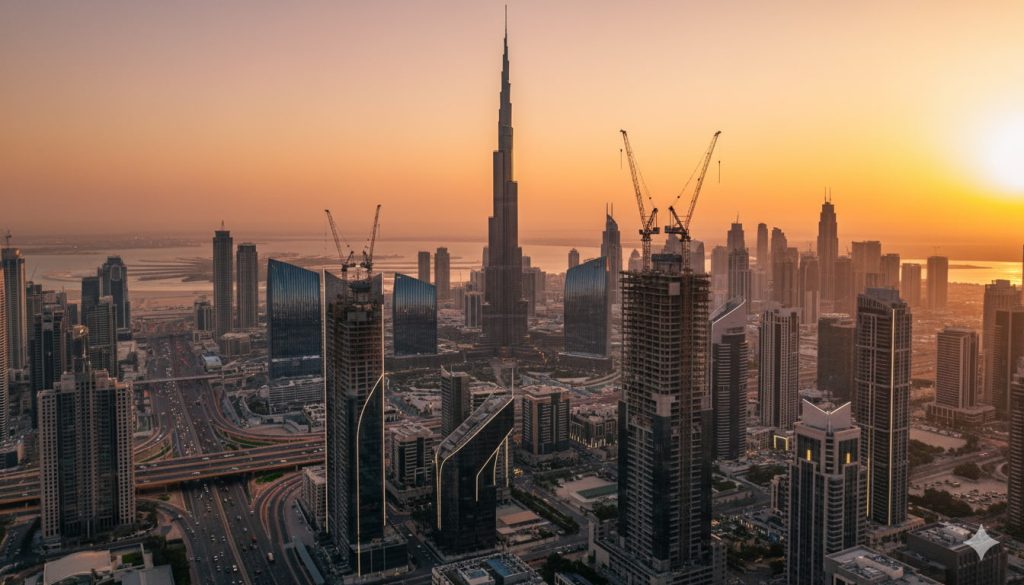
Short Summary:
“Dubai’s real estate market continues to break records, with AED 760+ billion in transactions in 2024 alone. But is it the right investment for you? This comprehensive guide explores ROI potential, risks, best areas, and everything you need to know before investing in Dubai property in 2026. Whether you’re seeking rental income, capital appreciation, or a Golden Visa, we’ll help you make an informed decision.”
Why Is Dubai Real Estate Attracting Global Investors in 2026?
Dubai has positioned itself as a global real estate powerhouse, and for good reason. The emirate recorded over AED 760 billion in property transactions in 2024, marking yet another record-breaking year. But what’s driving this unprecedented growth?
What Makes Dubai’s Property Market Different from Other Global Cities?
Unlike London, New York, or Singapore, Dubai offers a unique combination of benefits that few cities can match:
Zero Tax Paradise: Dubai has no property tax, no income tax, and no capital gains tax. Compare this to London’s stamp duty (up to 12%) or New York’s capital gains tax (up to 20%), and the advantage becomes clear. Every dirham you earn from rental income or property appreciation stays in your pocket.
100% Foreign Ownership: In designated freehold areas which include most prime locations like Dubai Marina, Downtown Dubai, and Palm Jumeirah foreign investors can own property outright with full title deed rights. There are no nationality restrictions.
Golden Visa Program: Purchase property worth AED 2 million or more, and you qualify for a 10-year UAE residency visa. This includes family sponsorship, business setup privileges, and access to world-class healthcare and education systems.
Strategic Location: Dubai sits at the crossroads of East and West, within a 4-hour flight radius of one-third of the world’s population. This makes it an ideal hub for global business and lifestyle.
World-Class Infrastructure: From the Dubai Metro expansion to the upcoming Dubai Creek Tower district, the government continuously invests in infrastructure that enhances property values and quality of life.
How Has Dubai Real Estate Performed Over the Last Decade?
Understanding historical performance helps predict future trends. Here’s what the data shows:
- 2015-2020: The market experienced a correction phase, with prices declining 20-30% in some areas. This was a natural adjustment after the pre-2014 boom.
- 2021-2024: Post-COVID recovery was extraordinary. Properties in prime areas like Dubai Hills Estate and Business Bay saw 40-80% appreciation.
- 2025-2026: The market continues its upward trajectory, driven by population growth (5-6% annually), UAE’s diversified economy, and the ripple effects of the Dubai 2040 Urban Master Plan.
According to the Dubai Land Department, the total number of property transactions increased by 32% year-over-year in early 2025, with off-plan sales dominating nearly 60% of the market.

Is the Dubai Property Market Still Growing in 2026?
Absolutely. Several macro factors guarantee continued growth:
Population Growth: Dubai aims to reach 5.8 million residents by 2040, up from approximately 3.6 million today. More residents mean higher housing demand.
Economic Diversification: The D33 Economic Agenda targets doubling Dubai’s GDP by 2033. Initiatives include expanding tech hubs (Dubai Silicon Oasis), tourism (targeting 25 million visitors annually), and finance (DIFC expansion).
Mega-Projects: Developments like Expo City Dubai, The Palm Jebel Ali, Dubai Creek Harbour, and the expansion of Al Maktoum International Airport (set to become the world’s largest) will create new property hotspots and appreciation zones.
Global Uncertainty: Geopolitical instability in other regions has made Dubai a safe haven for capital, particularly from Europe, Asia, and the Middle East.
What Are the Financial Benefits of Investing in Dubai Real Estate?
Let’s talk numbers the real reason savvy investors are flocking to Dubai.
What Is the Average ROI on Property Investment in Dubai?
Rental yields in Dubai are among the highest globally:
| Property Type | Average Rental Yield | Best Areas |
| Studio Apartments | 8-10% | JVC, Dubai South, International City |
| 1-2 Bedroom Apartments | 6-8% | Dubai Marina, Business Bay, JBR |
| Villas | 4-6% | Arabian Ranches, Dubai Hills Estate |
| Short-Term Rentals | 10-15%+ | Downtown Dubai, Palm Jumeirah, Dubai Marina |
Compare this to London (2-3%), New York (3-4%), or Singapore (2.5-3%), and Dubai’s advantage is unmistakable.
For example, a 1-bedroom apartment in Jumeirah Village Circle purchased for AED 700,000 can generate AED 55,000-60,000 in annual rent a solid 8% return before accounting for capital appreciation.
Is Rental Income in Dubai Tax-Free?
Yes! This is one of Dubai’s biggest attractions. There is:
- No personal income tax on rental earnings
- No capital gains tax when you sell
- No inheritance tax
The only tax you’ll encounter is a 5% VAT on certain services (commercial properties, not residential rentals). Additionally, RERA regulates rent increases through a rental index calculator, ensuring fair market practices that protect both landlords and tenants.
How Much Money Do You Need to Invest in Property in Dubai?
Entry points are surprisingly accessible:
- Studio Apartments: Starting from AED 400,000-600,000
- 1-Bedroom Apartments: AED 700,000-1,200,000
- 2-Bedroom Apartments: AED 1,000,000-1,800,000
- Villas: Starting from AED 1,500,000
Initial Costs to Budget For:
- Down Payment: 20-25% for residents, 40-50% for non-residents (if taking a mortgage)
- Dubai Land Department (DLD) Fee: 4% of property value
- Real Estate Agent Fee: Typically 2% (buyer) + 2% (seller)
- Registration Fee: AED 4,000 + additional admin charges
Off-Plan Payment Plans: Many developers offer flexible payment structures like 60/40 (60% during construction, 40% on handover) or even post-handover payment plans spreading over 3-5 years. This makes property ownership feasible even with limited upfront capital.
What Are the Risks of Investing in Dubai Real Estate?
Every investment carries risks. Here’s what you need to know to protect yourself.
Can You Lose Money Investing in Dubai Property?
Yes, if you make uninformed decisions. Investors who bought at the 2014 peak in oversupplied areas like certain parts of Dubai Sports City experienced 25-30% corrections.
Lessons learned:
- Timing matters: Buying during market peaks increases risk.
- Location is everything: Prime, well-connected areas recover faster.
- Developer reputation: Stick with established names like Emaar, Nakheel, Sobha, and Meraas.
However, long-term holders (7-10 years) have historically always recovered and profited due to Dubai’s population growth and economic expansion.
What Are the Hidden Costs of Owning Property in Dubai?
Beyond the purchase price, budget for:
- Service Charges: AED 10-30+ per sq ft annually (for maintenance, security, facilities)
- Chiller Fees: AED 10,000-20,000/year if your building uses district cooling
- DEWA Connection: AED 2,000-4,000 deposit
- Property Management Fees: 5-8% of rental income if you hire a manager
- Maintenance/Repairs: Budget 1-2% of property value annually
- Vacancy Periods: Plan for 1-2 months of vacancy between tenants
Understanding these costs ensures your yield calculations are realistic.
Is There a Property Bubble in Dubai?
This fear resurfaces every few years. Here’s why 2026 is different from 2008:
Arguments Against a Bubble:
- Mortgage Regulations: Stricter loan-to-value (LTV) ratios prevent over-leveraging
- RERA Oversight: Registration requirements and escrow protections minimize developer fraud
- Real Demand: Population growth is genuine, driven by job creation and quality of life
- Diversified Buyer Base: Unlike 2008 (speculator-heavy), today’s market includes owner-occupiers, long-term investors, and Golden Visa seekers
That said, certain micro-markets may experience short-term oversupply. This is why working with a knowledgeable partner like 800 Homes helps you avoid such pitfalls.
What Is the Best Area in Dubai to Invest in Property?
Choosing the right location determines your investment success.
Best Areas for Rental Yield in Dubai
If your priority is immediate cash flow:
- Jumeirah Village Circle (JVC): 8-9% yield, family-friendly, affordable entry (from AED 600K)
- Dubai Marina: 7-8% yield, high expat demand, beachfront lifestyle
- Business Bay: 7-8% yield, business district proximity, metro access
- Dubai South: 9-10% yield, near Al Maktoum Airport, emerging hub
Best Areas for Capital Appreciation in Dubai
If you’re focused on long-term growth:
- Dubai Hills Estate: Master-planned by Emaar, family community with golf course, parks, and schools. Villas here have appreciated 50%+ since launch.
- Palm Jumeirah: Iconic, limited supply, ultra-luxury segment. Continues to break price-per-square-foot records.
- Creek Harbour: Often called “the new Downtown,” with future landmarks like Dubai Creek Tower.
- Mohammed Bin Rashid City (MBR City): Massive district with parks, retail, and cultural destinations under development.
Where Should First-Time Investors Buy Property in Dubai?
For beginners, prioritize:
- Affordability: JVC, Town Square, Arjan, Dubai South
- Proven Rental Demand: Established communities with schools, supermarkets, and transport
- Reputable Developers: Emaar, Nakheel, Azizi, Danube
Explore beginner-friendly property listings and get expert recommendations tailored to your budget.
Who Can Buy Property in Dubai? Rules for Foreign Investors
Can Foreigners Buy Property in Dubai?
Yes! Any nationality can purchase freehold property in designated zones, which include nearly all major communities:
- Dubai Marina
- Jumeirah Beach Residence (JBR)
- Business Bay
- Dubai Hills Estate
- Arabian Ranches
The buying process is straightforward:
- Choose a property
- Sign a Memorandum of Understanding (Form F)
- Pay deposit (typically 10%)
- Transfer title at DLD (pay balance and fees)
- Receive your Title Deed
The entire process can take as little as 2-4 weeks for ready properties.
Can You Get a Mortgage as a Foreign Investor in Dubai?
Yes. Major banks like Emirates NBD, ADCB, Mashreq, and FAB offer mortgages to non-residents with:
- Loan-to-Value (LTV): 50-65% for non-residents
- Interest Rates: 4.5-6.5% (variable or fixed)
- Requirements: Passport, income proof, bank statements, credit report
Getting pre-approved strengthens your negotiating position and speeds up the purchase.
How to Invest in Dubai Real Estate with 800 Homes
Navigating Dubai’s property market can be complex. That’s where 800 Homes comes in.
Step 1 – Define Your Investment Goals
Are you seeking:
- Rental income for passive cash flow?
- Capital appreciation for long-term wealth?
- Golden Visa residency?
- A holiday home with rental income potential?
800 Homes’ experienced consultants help clarify your objectives and match them with the right property strategy.
Step 2 – Choose the Right Property Type and Location
With access to over 50 developers and 200+ communities, 800 Homes provides curated options across both off-plan and ready properties. Whether you prefer a studio in JVC or a villa in Dubai Hills, we’ve got you covered.
Step 3 – Conduct Due Diligence and Legal Checks
We verify title deeds, check developer track records, analyze service charge histories, and assess rental potential. You invest with confidence.
Step 4 – Secure Financing (If Needed)
Our mortgage advisory partners negotiate the best rates and terms on your behalf, streamlining approvals.
Step 5 – Complete the Purchase and Start Earning
From DLD registration to tenant placement and property management, 800 Homes offers end-to-end service. You sit back and watch your investment work for you.
Schedule a free consultation with 800 Homes today.
Expert Tips to Maximize Your Dubai Property Investment
What Mistakes Should You Avoid When Buying Property in Dubai?
- Buying Without Research: Don’t rely on hype. Study transaction data, rental trends, and developer histories.
- Ignoring Service Charges: A cheap property with AED 30/sq ft service charges can kill your yield.
- Choosing the Wrong Location: Prioritize connectivity, amenities, and proven demand.
- Skipping Legal Review: Always verify title deeds and RERA registration.
- Working with Unlicensed Agents: Ensure your agent is RERA-certified (like 800 Homes).
When Is the Best Time to Buy Property in Dubai?
Market Cycles: Historically, Q1 sees the highest transaction volumes. Off-plan launches often come with early-bird discounts (5-15% off).
Current Market Position (2026): We’re in a growth phase supported by fundamentals (population, economy, infrastructure). Waiting for a “crash” could mean missing out on appreciation.
The Bottom Line: The best time to invest was yesterday; the second-best time is today—with the right guidance.
What Is the Future of Dubai Real Estate? 2026-2030 Outlook
Dubai’s trajectory is unmistakable:
- Dubai 2040 Urban Master Plan: Expands green spaces, creates new urban centers, and enhances livability.
- D33 Economic Agenda: Targets GDP doubling, positioning Dubai as a top-3 global city.
- Population Target: 5.8 million by 2040 requires approximately 500,000 new housing units.
- Infrastructure Boom: Metro Blue Line extension, Etihad Rail, Al Maktoum Airport expansion.
These aren’t vague promises they’re government-backed mega-projects already underway. Property investors who position themselves now will ride this wave of appreciation.
Frequently Asked Questions About Investing in Dubai Real Estate
Yes. The market is supported by strong fundamentals: population growth, economic diversification, and infrastructure development. Transaction volumes and prices continue to rise.
Rental yields range from 6-10% depending on property type and location. Capital appreciation in prime areas has been 40-80% over the past 3-5 years.
Absolutely. RERA and DLD provide robust legal protections. Freehold ownership means you hold full title deed rights, regardless of nationality or residency status.
Yes. Purchase property worth AED 2 million+ and qualify for a 10-year Golden Visa, including family sponsorship and business setup privileges.
AED 2 million in property (can be a single property or combined portfolio). The property must be owned outright (not mortgaged beyond certain limits).
No. Many investors complete purchases remotely through power of attorney. However, visiting the property or working with a trusted partner like 800 Homes is highly recommended.
Yes. There are no restrictions on selling. The market is liquid, especially for well-priced properties in prime locations. Typical sale timelines range from 30-90 days.
Both exist. Freehold means you own the property indefinitely. Leasehold (typically 99 years) is less common and mostly in older areas. Most investor-friendly areas are freehold.
Yes, but you need a DTCM holiday home license. Properties in tourist areas like Downtown, Dubai Marina, Palm Jumeirah, and JBR are ideal for short-term rentals, yielding 10-15%+.
Passport copy, Emirates ID (if resident), UAE visa copy (if applicable), and proof of funds. For mortgage applications, add income proof and bank statements.
Final Verdict: Is It Worth Investing in Real Estate in Dubai?
Yes, if you invest wisely.
Dubai offers a rare combination of tax-free income, high rental yields, capital appreciation potential, residency benefits, and a globally connected lifestyle. The government’s long-term vision, backed by infrastructure spending and economic diversification, ensures the market’s growth trajectory continues.
However, success requires informed decision-making: choosing the right location, working with reputable developers, understanding costs, and timing your entry properly.
This is where 800 Homes becomes your competitive advantage. With deep market knowledge, access to exclusive listings, and end-to-end support from consultation to property management, we make your Dubai property journey seamless and profitable.
Ready to invest? Explore top properties with 800 Homes or schedule a free consultation to discuss your investment goals today.
