
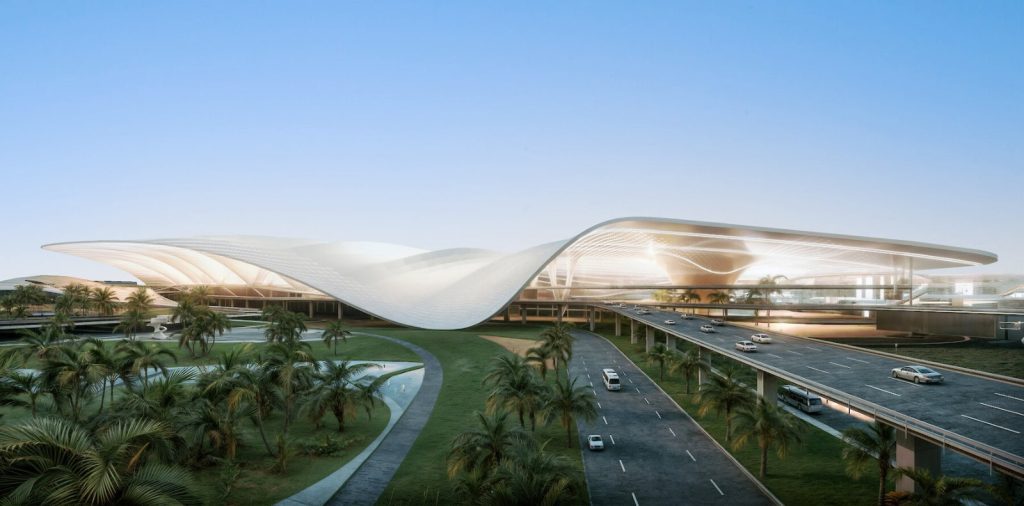
Dubai is building the world’s largest airport. That single fact is enough to change the real estate conversation around Dubai South completely. This guide breaks down what’s happening and why it matters.
The Al Maktoum International Airport expansion valued at AED 128 billion is not a distant plan on paper. It is an active, government-backed mega-project that is already reshaping how investors, developers, and homebuyers look at Dubai South property. If you are tracking where Dubai’s next major growth corridor is heading, this is the post you need to read.
We will break down what the expansion actually involves, how it historically impacts property prices, what Dubai South looks like on the ground today, and whether now is the right time to buy.
Al Maktoum Airport Expansion: The Key Facts
Al Maktoum International Airport also known as Dubai World Central (DWC) has been operational in limited capacity since 2010. But what was announced in 2024 changes its scale entirely.
Here is what the expansion involves:
- AED 128 billion total investment (approximately USD 35 billion)
- 260 million passengers per year the target annual capacity at full build-out
- Five parallel runways and the world’s largest passenger terminal
- Phase-based delivery, with the first operational phase targeting the mid-2030s
- Long-term plan: replace Dubai International Airport (DXB) as Dubai’s primary aviation hub
The project is managed by Dubai Aviation Engineering Projects (DAEP) and carries direct backing from Sheikh Mohammed bin Rashid Al Maktoum. This is not a speculative development. It is a state-level infrastructure commitment with a defined delivery roadmap.
Key Fact: At full capacity, Al Maktoum Airport will handle more than three times the current passenger volume of Dubai International Airport, making it the highest-capacity airport ever built.
For full details on the project scope, the official Dubai South website outlines the master plan and how the airport integrates with the wider city.
Why Airports Are Property Price Catalysts
Before looking at Dubai South specifically, it helps to understand why major airport projects drive real estate markets because the pattern is consistent across global cities.
London (Heathrow Corridor): Property values within a 10-mile radius of Heathrow saw sustained price growth above the London average during expansion phases, driven by aviation employment and transport improvements.
Singapore (Changi Airport): The areas surrounding Changi consistently rank among Singapore’s highest in rental demand, directly tied to the airport’s role as Asia’s top aviation hub.
Istanbul (New Istanbul Airport): Residential areas near the new airport which opened in 2018 recorded price growth of 20–30% within four years of the announcement, ahead of the opening.
The mechanism is straightforward:
- Airport expansion creates direct and indirect jobs — Al Maktoum is projected to generate 400,000+ positions
- Job growth drives population inflow — workers, professionals, and families relocate
- Population growth creates housing demand
- Rising demand pushes property prices and rental rates upward
This is infrastructure-driven property growth. It is not speculative. It is the direct result of economic activity generated by large-scale public investment.
Dubai South Property Market: What’s Already There
Dubai South is not an empty plot waiting to be developed. It is a 145 square KM master-planned city that already has active communities, infrastructure, and a growing population.
Here is what exists right now:
Residential Communities
- Emaar South — the flagship residential community, featuring golf-facing villas, townhouses, and apartments. One of the most in-demand addresses in the area.
- The Pulse — a mid-market residential neighborhood with apartments and townhouses
- MAG 5 Boulevard — an established affordable residential cluster with strong rental demand
Connectivity and Infrastructure
- Direct access to Sheikh Mohammed Bin Zayed Road (E311) and Emirates Road (E611)
- Expo City Dubai on the northern edge — the transformed legacy of Expo 2020, now a permanent urban and business district
- Planned Dubai Metro Blue Line extension toward Dubai South, which will significantly improve public transport access
Property Pricing (2024–2025)
- Average price per sq ft: approximately AED 900–1,200
- 1-bedroom apartments: from AED 650,000 to AED 900,000
- Townhouses: from AED 1.4 million to AED 2.2 million
- Gross rental yield: estimated 6–8% per annum for residential units
Market Data: Dubai South recorded a 28% year-on-year increase in off-plan transactions in 2024, according to Dubai Land Department records. That pace reflects genuine buyer interest, not just speculation.
You can verify the latest transaction data directly through the Dubai Land Department, which publishes real-time sales and registration figures.
If you want to explore what is currently available in the area, browse Dubai South property listings on 800 Homes to compare off-plan and ready units side by side.
Al Maktoum Airport Dubai South Property: Price Impact Breakdown
This is the section that matters most if you are actively considering a purchase. Let us look at the price impact across three timeframes.
Short-Term Outlook (2024–2027)
The announcement effect has already begun. Buyer enquiries for Dubai South have increased noticeably since the expansion was confirmed. However, prices have not yet reached the level they will once construction activity intensifies.
- Entry prices remain competitive compared to established areas like JVC, Business Bay, or Dubai Marina
- Off-plan developers are offering post-handover payment plans — sometimes stretching 3–5 years beyond completion
- Rental yields of 6–8% make short-term income viable while waiting for capital growth
- Strong developer incentives for early buyers, including DLD fee waivers and flexible instalments
This is still the early window. Not the cheapest it has ever been — but far from its ceiling.
Medium-Term Outlook (2027–2032)
This is where the numbers are expected to move meaningfully.
- Airport construction activity at peak — thousands of contractors, engineers, and logistics professionals will need accommodation nearby
- Service and retail sectors expand to support the growing population
- Infrastructure improvements — particularly transport links — make Dubai South more accessible from other parts of Dubai
- Property prices per sq ft projected to rise 20–35% based on phased delivery progress and population growth
Long-Term Outlook (Post-2035)
Once the first operational phase of the airport goes live, Dubai South transitions from a growth story to a functioning urban hub.
- Comparable to how Dubai Marina evolved once the waterfront and metro access were complete
- Capital appreciation potential is strongest for buyers who entered before this phase
- Demand from aviation workers, airline staff, logistics professionals, and corporate tenants creates a diversified rental base
The long-term case for Al Maktoum Airport Dubai South property is built on fundamentals, not hype. Employment, connectivity, government investment, and population growth are all pointing in the same direction.
Is Dubai South the Right Move for You?
Dubai South appeals to different buyer types for different reasons. Here is a practical breakdown.
Long-Term Investors (5–10 Year Horizon)
This is the strongest use case. If you are buying today with a plan to hold, the combination of a rising market and infrastructure delivery timeline works in your favour. You buy at relative value, and you benefit as the airport comes online.
Rental Income Buyers
Yields of 6–8% in the current market are already competitive by Dubai standards. As the population around Dubai South grows, rental demand is likely to push those numbers further. Short-term rental potential near an aviation hub also improves once the airport is operational.
Expats and End-Users
Compared to central Dubai, Dubai South offers more space for less money. If you are planning to live near your workplace particularly if you work in aviation, logistics, or Expo City this is a practical and affordable choice.
Off-Plan Buyers
Payment plan structures in Dubai South are among the most flexible in the market. Many projects offer 10% down, with the remainder split across construction and post-handover periods. That reduces the capital burden significantly.
What to look for when choosing a specific project:
- Location within 5–10 minutes of the airport zone
- Developer track record for on-time delivery (Emaar, Azizi, and MAG have active projects here)
- Planned or confirmed transport access nearby
- Building quality and service charge rates
Honest Look: Risks of Buying Near Al Maktoum Airport
Credible analysis includes risks. Here are the ones worth knowing:
Long Construction Timeline
Full airport capacity may not be reached until the 2040s. If you need short-term returns, that timeline matters. The investment case is long-term by nature.
Construction Noise and Disruption
Living near an active mega-construction site has practical downsides, particularly for end-users. This is a transitional phase, but it is real.
Supply Risk
Multiple developers are launching in Dubai South simultaneously. An oversupply of units in the short term could put downward pressure on rental rates before population growth catches up.
Announcement Effect Already Priced In
Some of the price growth triggered by the airport announcement has already happened. Buyers entering now are not getting 2020 prices. The upside remains, but the base is higher.
Currency and Macro Risk
For international buyers purchasing in AED, currency movements matter. Dubai’s real estate market is also connected to global interest rate cycles and oil-driven regional confidence.
Understanding these risks does not mean avoiding the market, it means entering with clear expectations.
Find Dubai South Properties with 800 Homes
If Dubai South is on your radar, 800 Homes can help you move from research to decision with confidence.
We work across Dubai’s key growth corridors, including Dubai South, Expo City, and surrounding communities. Whether you are looking at off-plan opportunities or ready-to-move units, our team provides honest, data-driven guidance, not just listings.
Visit 800homes.ae to explore available properties or connect with an advisor who knows this market in detail.
Final Thoughts: Al Maktoum Airport and the Dubai South Opportunity
The Al Maktoum Airport expansion is one of the most consequential infrastructure decisions in Dubai’s history. A project at this scale AED 128 billion, 260 million passengers; the world’s largest terminal does not happen quietly. And it does not leave the surrounding real estate market unchanged.
Dubai South is directly in the path of growth. The communities are real. The infrastructure is developing. The investment fundamentals yield, pricing, developer activity, and government commitment all point toward sustained upward momentum.
Prices are still accessible. The airport is not yet operational. That combination represents the window that investors in London, Singapore, and Istanbul recognized before those airports reached their potential.
The data is clear. The project is confirmed. The question is simply: how long will you wait to look seriously at what Dubai South has to offer?
Frequently Asked Questions
Q: How will Al Maktoum Airport expansion affect Dubai South property prices?
The expansion is expected to increase housing demand significantly through job creation and population growth. Based on comparable airport city developments globally and current trajectory, medium-term price growth of 20–35% per sq ft is a realistic projection as construction phases progress.
Q: Is Dubai South a good place to invest in property right now?
For buyers with a 5–10-year horizon, Dubai South offers competitive entry price, strong rental yields of 6–8%, and a clear infrastructure-backed growth driver in the Al Maktoum Airport project. It is one of the more fundamentally supported investment cases in Dubai today.
Q: When will Al Maktoum Airport be fully operational?
The first operational phase is targeted for the mid-2030s. Full passenger capacity of 260 million annually is a longer-term goal, with timelines likely extending into the 2040s. Buyers should factor this into their investment horizon planning.
