
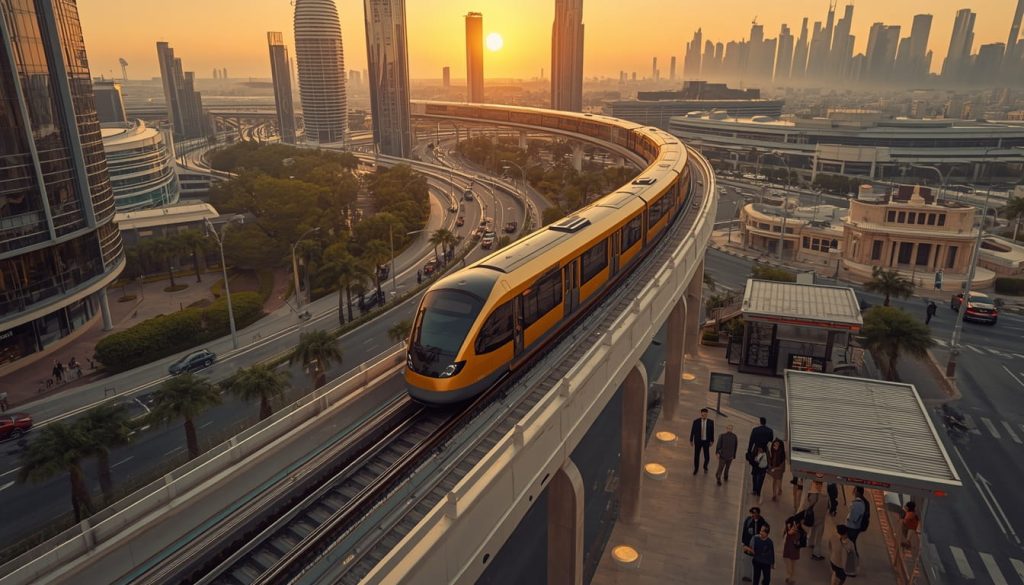
Summary
“Property values near metro stations have historically risen in Dubai. The Gold Line is expected to follow the same trend, creating strong opportunities for early buyers and long-term investors.”
Dubai has a well-documented pattern. Announce a metro line. Watch the surrounding neighborhoods transform. The Metro Gold Line is the next chapter in that story, and if you have been thinking about buying property in Dubai, this is one infrastructure development you cannot afford to ignore.
This guide walks you through the full Metro Gold Line route, the stations that matter most, and the residential areas where smart buyers are already paying attention. No jargon, no filler, just the information you need to make a confident property decision.
What Is the Metro Gold Line?
The Metro Gold Line is part of Dubai’s next phase of metro network expansion, developed under the Roads and Transport Authority (RTA). It is designed to extend metro connectivity into districts that currently rely entirely on private vehicles and buses areas that are home to hundreds of thousands of residents.
The Gold Line sits within the broader framework of Dubai’s 2040 Urban Master Plan, which targets five major urban centers across the emirate and aims to move 25% of all daily trips to public transport by 2030. The Gold Line is one of the primary tools to get there.
Think of it this way. The Red Line opened in 2009 and connected Dubai Marina to Deira. The Green Line followed and transformed Bur Dubai and Al Qusais. The Gold Line is poised to do the same for the city’s eastern and southeastern corridors in areas that have grown rapidly in population but slowly in transit options.
Metro Gold Line Route: What We Know So Far
The RTA has confirmed the Gold Line as part of Dubai’s metro expansion agenda, though the full alignment and phased station list are being released progressively. Based on current publicly available planning documents and RTA announcements, the Gold Line is expected to run through some of Dubai’s most strategically important and densely populated zones.
Here is a breakdown of the key corridors and anticipated station areas:
Al Jaddaf
A cultural and mixed-use district sitting along Dubai Creek. Al Jaddaf already has a Green Line station but the Gold Line is expected to deepen connectivity here, making it a multimodal transit hub. The area is home to the Jameel Arts Centre, several five-star hotels, and a growing number of residential towers.
Dubai Festival City
One of Dubai’s most established mixed-use destinations, combining retail, dining, hotels, and residential units along the Creek waterfront. A Gold Line connection here would significantly increase property desirability for both buyers and renters.
Ras Al Khor
Known largely for the Ras Al Khor Wildlife Sanctuary, this corridor is evolving. Industrial and logistics uses are gradually giving way to broader urban development, and metro access would accelerate that transition.
Meydan
This is perhaps the most anticipated stop on the entire Gold Line. Meydan sits at the center of some of Dubai’s most talked-about developments in District One, MBR City, and the upcoming Meydan One Mall. Today, getting to Meydan requires a car. A metro station here would fundamentally change the property equation.
Dubai Silicon Oasis
A self-contained township with residential, commercial, retail, and technology sector employers — all within one master-planned community. DSO is currently metro-free, which is the single biggest gap in an otherwise well-rounded community offering.
Academic City
Home to more than 27 universities and higher education institutions, Academic is one of the largest education clusters in the Middle East. The resident student and City faculty population is enormous, and right now they depend entirely on buses and private rides.
International City
One of Dubai’s most affordable and densely populated residential communities. Tens of thousands of residents live here, and a metro connection would be transformative both for daily life and for property values.
The Gold Line is projected to cover approximately 30 to 35 kilometers and include 15 to 20 stations, making it one of the longer additions to Dubai’s metro map.
How the Gold Line Route Translates into Real Estate Opportunity
Here is the part that matters if you are thinking about buying or investing.
Metro connectivity in Dubai has a consistent and measurable impact on property values. When the Red Line opened, properties within 500 meters of stations were appreciated by 10% to 20% in the years that followed. The Green Line repeated the pattern across Deira and Bur Dubai. The Gold Line is drawing from the same playbook but with one key difference.
The areas on the Gold Line route are currently undervalued relative to their growth potential. That gap between today’s price and tomorrow’s value is where real estate opportunities live.
Top Areas to Buy Property Along the Metro Gold Line
Meydan — The High-Growth Flagship
Meydan is already on every serious investor’s radar, but metro access would take it to another level entirely. The area offers a mix of townhouses, villas, and apartments across communities like District One West, Sobha Hartland, and various MBR City sub-communities.
- Price range: AED 1.2M – AED 4M+
- Best for: Mid to premium budget buyers, long-term capital growth
- Why now: Pre-metro pricing. Once the station is confirmed and operational, entry prices will likely shift upward.
If you want to explore current listings in this corridor, take a look at Dubai’s most in-demand residential communities on 800 Homes to compare options across budget brackets.
Dubai Silicon Oasis — The Affordable Yield Play
DSO offers some of the best rental yields in Dubai, consistently in the 6% to 8% range, driven by strong demand from tech-sector employees and mid-income families. The community has its own retail, schools, and parks everything except a metro station.
- Price range: AED 400K – AED 900K
- Best for: First-time buyers, buy-to-let investors
- Why now: Yield is already strong. Metro connectivity would push both rents and capital values higher, compressing yield as prices rise — so buying before that happens is the better position.
Academic City and Al Warqaa — The Consistent Demand Zone
Academic City itself has limited residential stock, but adjacent communities like Al Warqaa and parts of Mirdif feed directly into this corridor. Rental demand here is reliable and largely recession-resistant because it is driven by education students and faculty need housing regardless of market cycles.
- Price range: AED 350K – AED 800K
- Best for: Investors seeking stable occupancy and predictable income
- Why now: Low entry prices relative to the demand base, with metro connectivity acting as a future value catalyst.
International City — Maximum Affordability, Maximum Yield
International City consistently delivers some of the highest gross rental yields in Dubai, often touching 8% to 9%. It is not a luxury market, but it is a deep and liquid one. A Gold Line station here would improve livability significantly and with that comes upward pressure on rents and sale prices.
- Price range: AED 250K – AED 600K
- Best for: Entry-level investors, portfolio diversification
- Why now: The affordability floor is already attractive. Metro access would raise that floor.
Al Jaddaf — The Premium Urban Choice
Al Jaddaf is already established and already connected, but improved Gold Line access would reinforce its status as a premium urban address. It appeals to professionals who want design-forward living, walkable culture, and proximity to both Downtown Dubai and Dubai Creek.
- Price range: AED 700K – AED 2M+
- Best for: Professionals, lifestyle buyers, mid-to-premium investors
- Why now: The area is maturing into a premium address. Getting in before that transition fully prices in is the window.
The 800-Meter Rule — And Why It Matters When Choosing a Property
Not all metro-adjacent properties are equal. The real estate industry uses what is informally called the 800-meter rule properties within an 800-meter walkable radius of a station tend to outperform those further away in both capital value and rental demand.
When evaluating any property near a Gold Line station, consider:
- Walking distance to the station entrance, not just proximity on a map
- Street-level walkability — wide pavements, shade, and pedestrian crossings matter in Dubai’s climate
- Mixed-use density — stations surrounded by retail, F&B, and offices create stronger property ecosystems
- Building age and quality — metro access enhances value but does not replace fundamentals like build quality and community management
This is why speaking to an agent who understands both infrastructure timelines and micro-market conditions makes a genuine difference. Generic advice rarely accounts for the specific block, tower, or unit type that sits in the sweet spot.
What the Dubai 2040 Urban Master Plan Adds to This Picture
The Metro Gold Line does not operate in isolation. It is embedded within the Dubai 2040 Urban Master Plan, a government-led framework that designates specific growth corridors, protects green spaces, and directs density toward planned urban centers.
Several of the communities on the Gold Line route including DSO, Academic City, and Meydan are designated as priority development zones under this plan. That means they are not just benefiting from metro access; they are benefiting from government infrastructure investment, zoning support, and population allocation strategies all working in the same direction.
For property buyers, this kind of policy alignment is one of the strongest signals available. When a metro line, an urban master plan, and natural population growth all point at the same corridor, that corridor tends to deliver.
Practical Steps for Buyers Watching the Gold Line
Step 1 — Map the route against your budget
Identify which Gold Line station areas fall within your price range. The communities span a wide bracket — from AED 250K studios in International City to AED 4M+ villas in Meydan.
Step 2 — Decide: off-plan or ready
Off-plan properties in Gold Line corridors often priced at a 15% to 25% discount compared to projected post-completion values. Ready properties offer immediate rental income. Your choice depends on your holding horizon and cash flow needs.
Step 3 — Assess walkability before you commit
Use satellite maps to check the actual walking route from a shortlisted property to the nearest proposed station. Distance on a map and practical walking distance in Dubai’s layout can differ significantly.
Step 4 — Track RTA announcements
The RTA releases project updates, tender awards, and station confirmations progressively. Following these announcements helps you understand where the project is in its timeline — which directly affects when pricing pressure typically begins to build.
Step 5 — Get specialist advice
Transit-oriented real estate requires context that general listings cannot provide. Working with an agent who tracks both project timelines and community-level pricing gives you a real edge.
Final Word
The Metro Gold Line route connects some of Dubai’s most underserved yet deeply populated communities to the city’s transit spine. For residents, that means better commutes. For property buyers and investors, it means a window one that historically closes once the station opens, and prices adjust.
The pattern in Dubai is consistent. Infrastructure follows the plan. Property follows the infrastructure. The buyers who move during the planning and construction phase are the ones who capture the most value.
If you are considering a property purchase in any of these corridors, now is the time to research, compare, and act with information rather than react to price movements later.
